Thursday, July 18, 2013

Ypres (Iepers)

No self-respecting Canadian can come to Belgium without going to Ypres.  It was here during WWI, that John McCrae, a Canadian military doctor, composed his famous poem "In Flanders Fields".  Every year on November 11 we recite this poem and it plays over the radio and TV along with the Remembrance Day ceremonies.  It was very moving to visit this city which has enshrined military cemeteries alongside everyday life.  There is a wonderful WWI museum which was very detailed and haunting.  In addition to the poppy wreaths and testimonials, we were able to see a few Canadian headstones.


Belgium certainly suffered during both WWI and WWII under German occupation both times.  Monuments and memorials abound in both the Flemish and French parts of the country.  We had visited the WWII Normandy beaches and cemeteries when we were in France in 2010 and were certainly moved by the experience.  However, we were very touched by the quiet dignity of these smaller cemeteries in their non-hyped atmosphere.  We were the only ones walking through the headstones contemplating what it must have been like to be 19 years old, far from your home in Canada and fighting an impossible war in 1914, in this small country surrounded by enemy fire. Real traces still linger as there are apparently thousands of unexploded shells buried underground from this war...

Monday, July 15, 2013

Bruges

The jewel in the crown of Flanders is Bruges.   Bruges originated in the 9th century as a fortress to defend the coast against the Vikings.  It was dominated by the French and then the Dukes of Burgundy and became one of Europe's most sophisticated and international cities, famed for its luxury and extravagance.  Today it is known as the Venice of the north.

With canals running through it; gingerbread houses, the grand square, museums, art galleries and quaint shops and restaurants, it's easy to see why Bruges is one of the most visited cities in Belgium, very much like a fairy tale.

In 2008 a film was made starring Colin Farrell as a hitman called In Bruges.  We watched it before leaving the US and it was great to see all of the sights come to life.  Although, because the movie was quite dark and the characters kept referring to the city as "F-ing Bruges", I was trying to get certain images out of my mind as we walked the street!!  A good film, but not for family viewing...


Friday, July 12, 2013

Oostende

We wanted to travel to the Belgian coast and see the North Sea.  Oostende is the biggest seaside resort in Belgium and I'd seen it featured in a few French movies (in particular, Place Vendome with Catherine Deneuve and Alain Delon one of my favourites!) so this seemed like a good stop to make.  You can take ferries to England from here (it's one of several ports in Northern France and Belgium that you can travel by boat to Dover), and you can also take a train or boat to Antwerp.

We enjoyed walking on the boardwalk;  it was a chilly day, no one was swimming, but it was very nice to be at the ocean and to eat some wonderful, fresh-caught seafood.  The fishmongers had prepared some escargot soup and small servings of shrimp, lobster, scallops and sauce, ready to eat right there.  Quite a few people were also enjoying this for lunch and the seagulls were diving and stealing people's food!  We were lucky, we were able to keep ours for ourselves.


Friday, July 5, 2013

Antwerp

Antwerp is a very Dutch city; at least that is how it appears to me.  The architecture in Flanders is very different from Wallonia and certainly the Dutch and even German influence is present here.  Antwerp is the largest city in Flanders, a very important port for the country, and is the diamond capital of Europe and many people walk around town with briefcases handcuffed to their wrists, just like in the movies!!!

Antwerp is also home to the Pieter Paul Rubens house and museum - Rubenshuis - as this is where the artist lived and worked for the last 29 years of his life (1611-40).  Rubens was a classical painter, famous for painting religious tableaux.  The house was very interesting to visit.


As we made our way towards the square, we passed by a lace museum/store.  Flanders is famous for its lace making and exports much of it worldwide.  We bought a couple of small souvenirs.


There is a very interesting legend in Antwerp which is represented in two key statues.  According to folklore, the city got its name from a giant called Antigoon who lived near the river Scheldt. He demanded that people pay a toll to cross the river, and if you didn't he would cut off your hand and throw it into the river.  One day, the giant was killed by a young man named Brabo who successfully fought the dragon and cut off one of his hands and threw it in the river. The name Antwerpen then comes from Dutch hand werpen and wearpan (= to throw).  The main square has a statue of Brabo with the giant's hand. On one of the downtown streets, there is a stone sculpture of a hand:  you can also buy hand-shaped cookies, chocolates and other souvenirs.


We finished the day having steak tartare for dinner:  a real delicacy that you season and spice yourself at the table.

Wednesday, July 3, 2013

Ghent

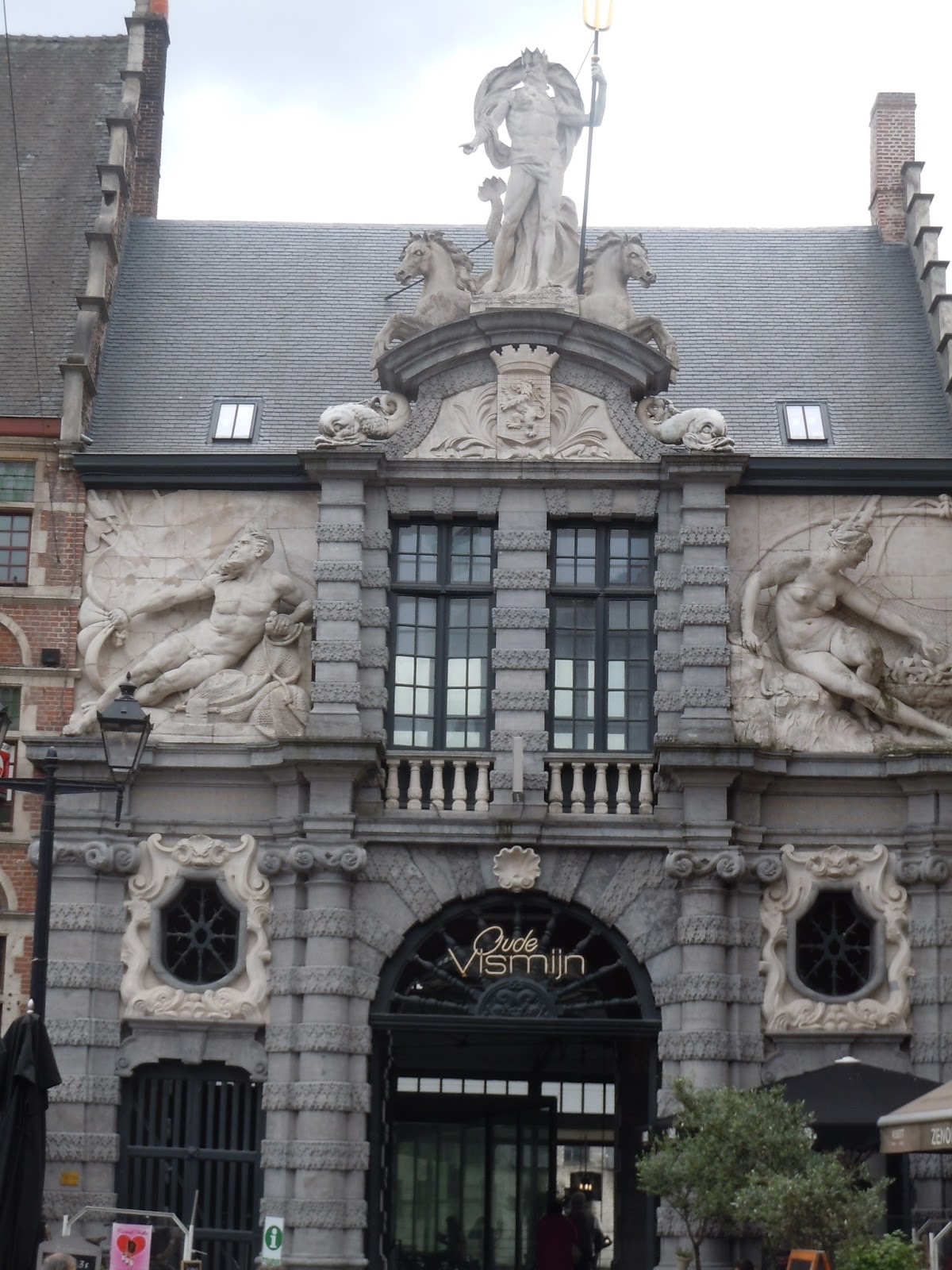
Ghent was the first Flemish city we visited.  Located about 45 minutes northwest of Brussels, Ghent was one of the richest cities in the middle ages and became a major industrial centre in the 19th century.  Today, many of the medieval buildings have been cleaned and restored as to attract tourists and the canal is now a very beautiful walk way lined with cafes and restaurants. 

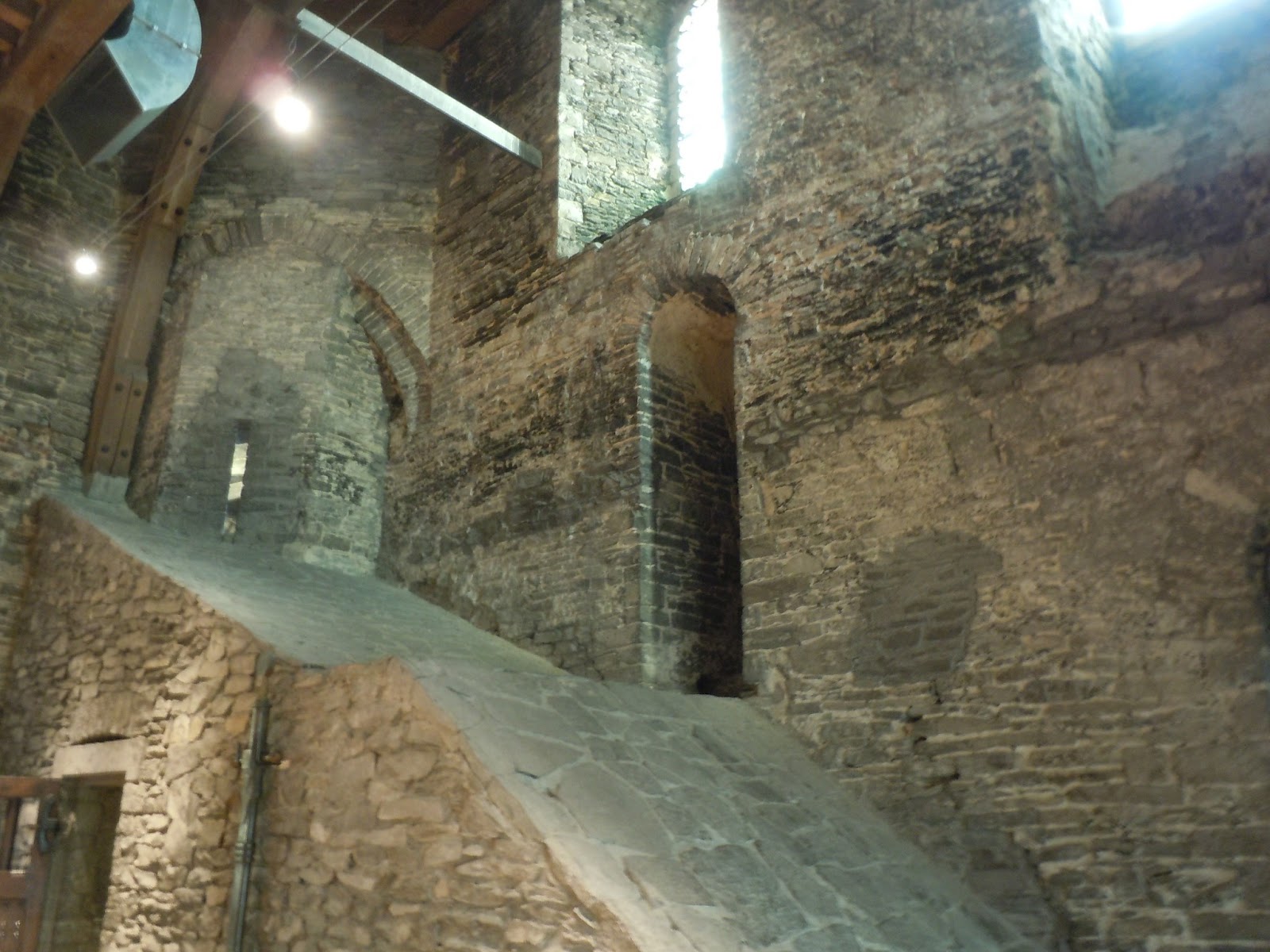
We visited Het Gravensteen - the Castle of the Counts - which was once the seat of the counts of Flanders.  Parts of the castle date back to 1190, and until the 14th century, the castle was Ghent's main military stronghold.  It was then used as a jail until the late 1700s.  There are some great exhibits of torture chambers, the guillotine (gory stuff!) as well as a wonderful walk along the rampart walls, giving a good view of the city.


Cities in Belgium generally have a town square or "place" - the best example of this is Brussels' Grande Place, but Ghent's small square is quite charming and shows off the architecture of the buildings surrounding the center.


The canal is a big attraction in Ghent.  We walked along the sides and many people we out walking, biking and having a beer outside, despite the chilly and damp weather.


Monday, July 1, 2013

Getting used to a new language

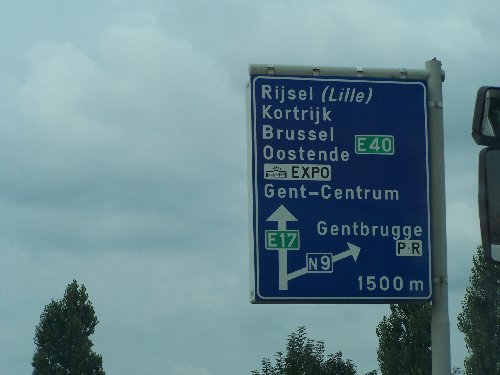
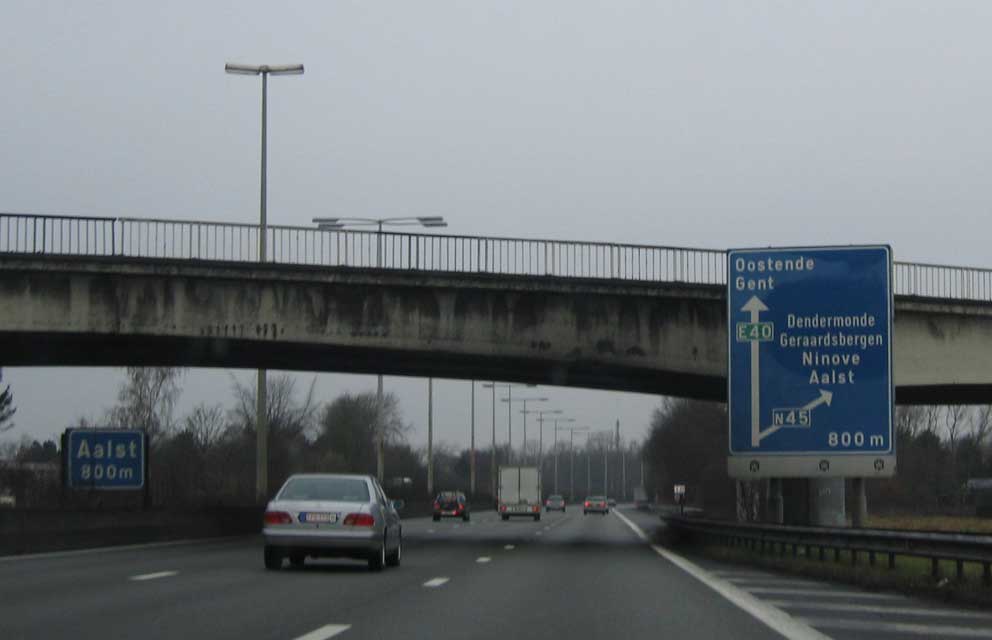
Most places that I've travelled to I've been able to speak the language.  Although in Northern Belgium, English is widely spoken, it is essentially a unilingual region when it comes to road signs, gas station and store messages.  Flemish is basically Dutch, varying only slightly in dialect from what is spoken in Holland.  Being a Germanic language, there are many similarities to German and also to English.  This made for some very interesting linguistic reading games as we were driving along the various highways that form part of the very impressive freeway system here.   We could understand many written words and sentences, but it was difficult to comprehend much of the spoken language,  I knew before coming here that it was best to speak English in this region of Belgium as the French and Flemish do not get along generally.


The first thing we did when we picked up our rental car at the airport was to get the GPS going.  We resisted the temptation to choose Flemish as the language of communication (OK, so I was outnumbered in my attempt to be immersed in the local language:  I was thinking, Flemish in Flanders and French in Wallonia..).  Common sense prevailed however and we now have a nice British English voice telling us where to go.  We are back in kilometers and meters so that helps our Canadian minds to judge distances better.  Now once we get used to the European drivers, then we'll be fine...


Sunday, June 30, 2013

Belgium - A divided country

It's very nice to be back in Europe for an extended stay.  Three years ago, I was lucky enough to spend a 5 weeks in France and this summer I am in Belgium for 6 weeks doing research at a wonderful little university in Mons, Belgium.

We have been here a week travelling around Flanders (the Flemish part of Belgium) before arriving this afternoon in Mons, a medieval city in Wallonia (the French part of Belgium).

We spent time in Brussels, Ghent, Antwerp, Brugge, Oosten, and Ypres.  I'll post pictures and details soon.


                                                                   Flag of Belgium
                                                                    Flag of Flanders

Flag of Wallonia