Friday, July 5, 2013

Antwerp

Antwerp is a very Dutch city; at least that is how it appears to me.  The architecture in Flanders is very different from Wallonia and certainly the Dutch and even German influence is present here.  Antwerp is the largest city in Flanders, a very important port for the country, and is the diamond capital of Europe and many people walk around town with briefcases handcuffed to their wrists, just like in the movies!!!

Antwerp is also home to the Pieter Paul Rubens house and museum - Rubenshuis - as this is where the artist lived and worked for the last 29 years of his life (1611-40).  Rubens was a classical painter, famous for painting religious tableaux.  The house was very interesting to visit.


As we made our way towards the square, we passed by a lace museum/store.  Flanders is famous for its lace making and exports much of it worldwide.  We bought a couple of small souvenirs.


There is a very interesting legend in Antwerp which is represented in two key statues.  According to folklore, the city got its name from a giant called Antigoon who lived near the river Scheldt. He demanded that people pay a toll to cross the river, and if you didn't he would cut off your hand and throw it into the river.  One day, the giant was killed by a young man named Brabo who successfully fought the dragon and cut off one of his hands and threw it in the river. The name Antwerpen then comes from Dutch hand werpen and wearpan (= to throw).  The main square has a statue of Brabo with the giant's hand. On one of the downtown streets, there is a stone sculpture of a hand:  you can also buy hand-shaped cookies, chocolates and other souvenirs.


We finished the day having steak tartare for dinner:  a real delicacy that you season and spice yourself at the table.

Wednesday, July 3, 2013

Ghent

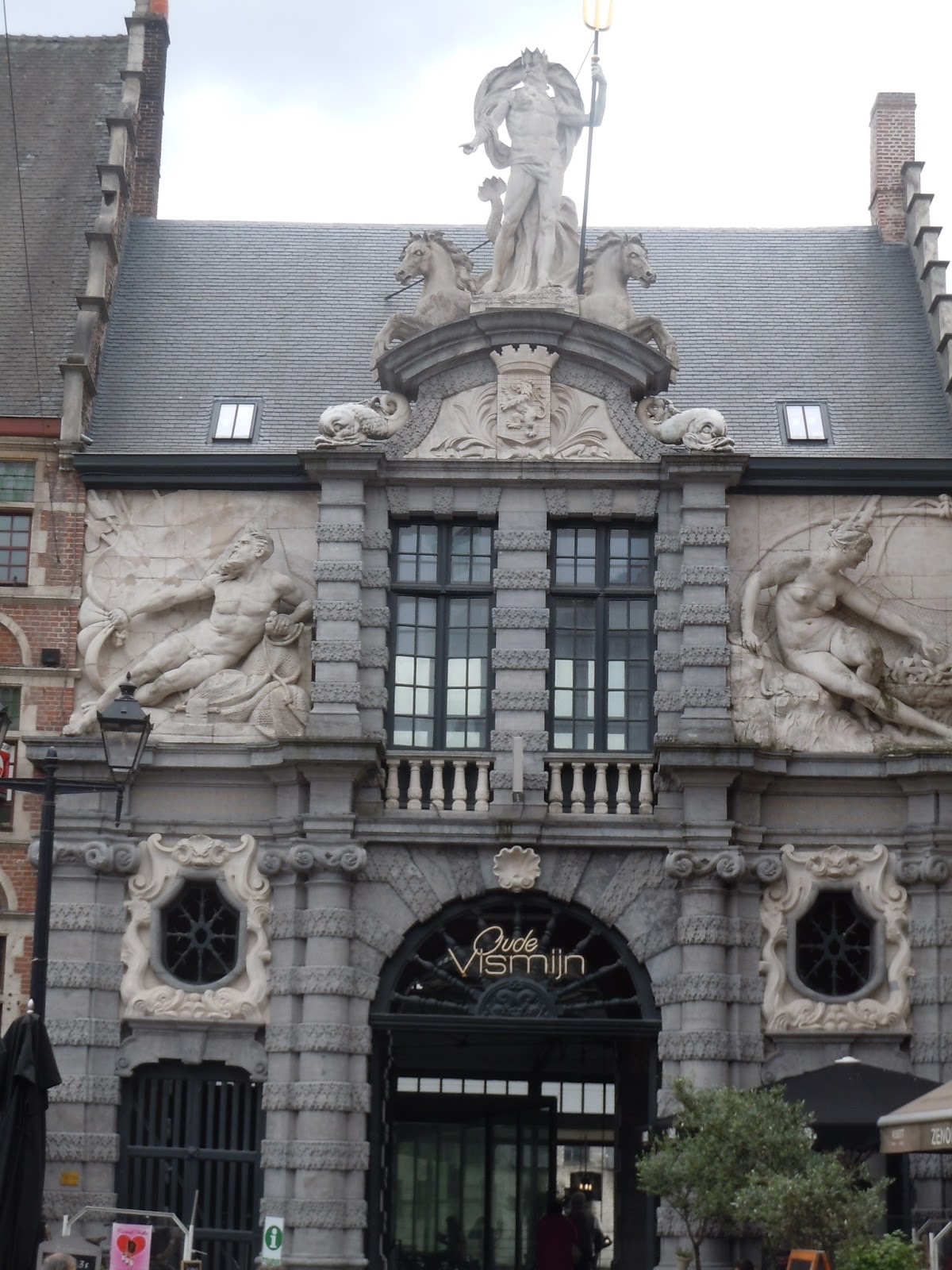
Ghent was the first Flemish city we visited.  Located about 45 minutes northwest of Brussels, Ghent was one of the richest cities in the middle ages and became a major industrial centre in the 19th century.  Today, many of the medieval buildings have been cleaned and restored as to attract tourists and the canal is now a very beautiful walk way lined with cafes and restaurants. 

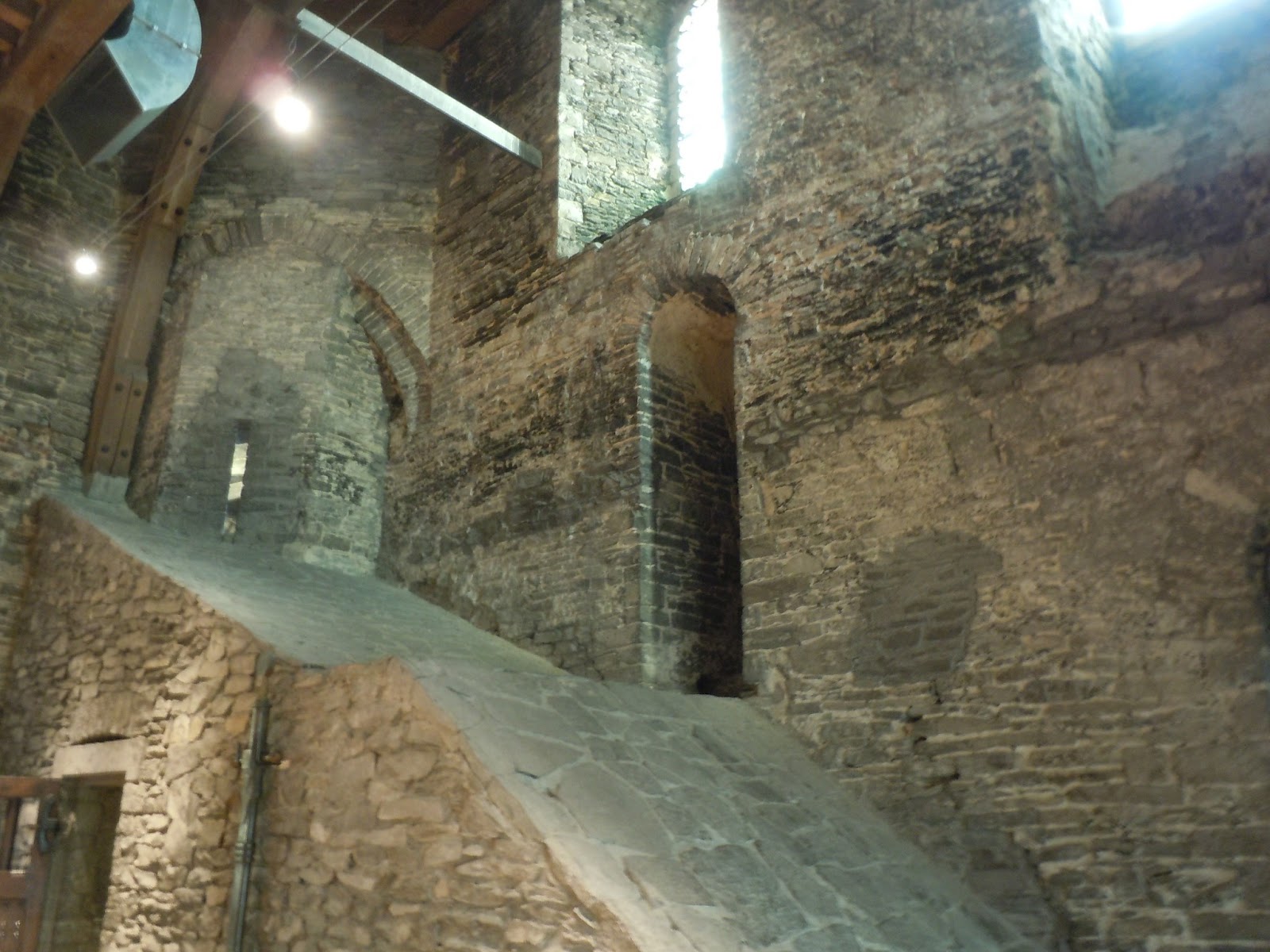
We visited Het Gravensteen - the Castle of the Counts - which was once the seat of the counts of Flanders.  Parts of the castle date back to 1190, and until the 14th century, the castle was Ghent's main military stronghold.  It was then used as a jail until the late 1700s.  There are some great exhibits of torture chambers, the guillotine (gory stuff!) as well as a wonderful walk along the rampart walls, giving a good view of the city.


Cities in Belgium generally have a town square or "place" - the best example of this is Brussels' Grande Place, but Ghent's small square is quite charming and shows off the architecture of the buildings surrounding the center.


The canal is a big attraction in Ghent.  We walked along the sides and many people we out walking, biking and having a beer outside, despite the chilly and damp weather.


Monday, July 1, 2013

Getting used to a new language

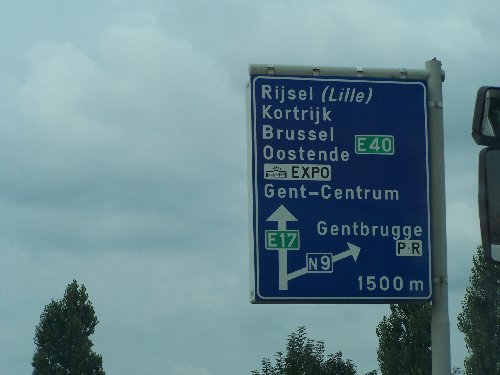
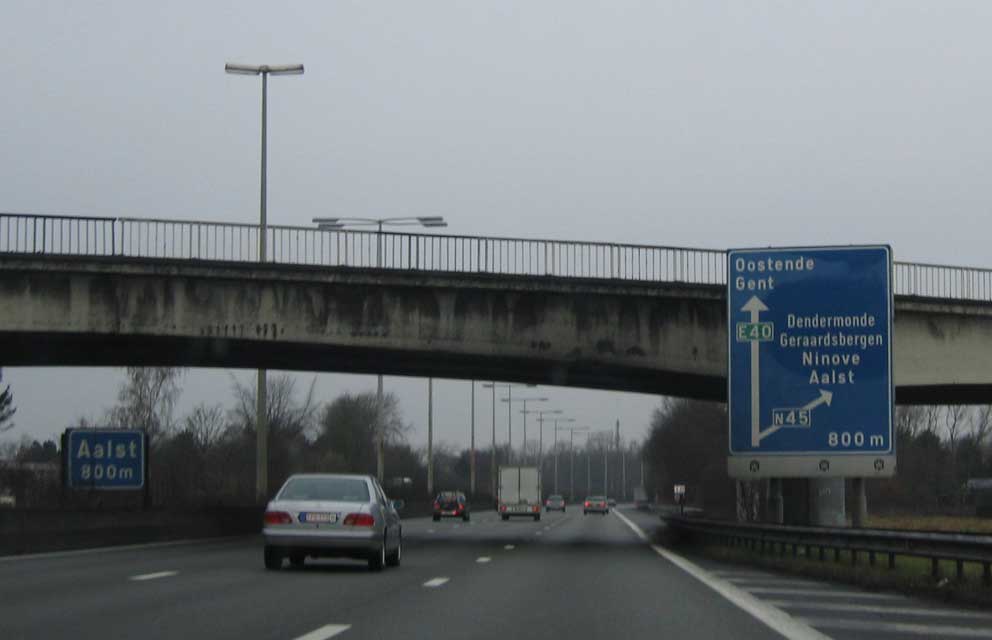
Most places that I've travelled to I've been able to speak the language.  Although in Northern Belgium, English is widely spoken, it is essentially a unilingual region when it comes to road signs, gas station and store messages.  Flemish is basically Dutch, varying only slightly in dialect from what is spoken in Holland.  Being a Germanic language, there are many similarities to German and also to English.  This made for some very interesting linguistic reading games as we were driving along the various highways that form part of the very impressive freeway system here.   We could understand many written words and sentences, but it was difficult to comprehend much of the spoken language,  I knew before coming here that it was best to speak English in this region of Belgium as the French and Flemish do not get along generally.


The first thing we did when we picked up our rental car at the airport was to get the GPS going.  We resisted the temptation to choose Flemish as the language of communication (OK, so I was outnumbered in my attempt to be immersed in the local language:  I was thinking, Flemish in Flanders and French in Wallonia..).  Common sense prevailed however and we now have a nice British English voice telling us where to go.  We are back in kilometers and meters so that helps our Canadian minds to judge distances better.  Now once we get used to the European drivers, then we'll be fine...


Sunday, June 30, 2013

Belgium - A divided country

It's very nice to be back in Europe for an extended stay.  Three years ago, I was lucky enough to spend a 5 weeks in France and this summer I am in Belgium for 6 weeks doing research at a wonderful little university in Mons, Belgium.

We have been here a week travelling around Flanders (the Flemish part of Belgium) before arriving this afternoon in Mons, a medieval city in Wallonia (the French part of Belgium).

We spent time in Brussels, Ghent, Antwerp, Brugge, Oosten, and Ypres.  I'll post pictures and details soon.


                                                                   Flag of Belgium
                                                                    Flag of Flanders

Flag of Wallonia

Monday, August 23, 2010

The Great Falls and the final frontier.


Niagara Falls are stunning, breathtakingly beautiful during the day as well as lit up at night in the colours of the rainbow. Naturally, there were huge crowds all along the walkway overlooking both sets of falls, but this didn't take away from the majestic views. I must admit that I was surprised by the commercial, neon mecca that has taken over the city. Now, I haven't been here since I was a kid, but the whole town has become a sort of Las Vegasesque strip with carnival attractions, over priced food, casinos and cheap souvenir shops. While interesting to walk through once, I was cringing at the amounts of money that some families would be spending on their vacation. I guess tourism is definitely alive and well in the province of Ontario.


Next stop: the border.

Sunday, August 22, 2010

Toronto and a little Harry Potter


We stopped over for a day and night in Toronto after Ottawa. Our original intention was to visit the Canada's Wonderland amusement park, but it was a rainy dreary day and I had a better solution. I had discovered that the travelling Harry Potter exhibition was in Toronto at the Ontario Science Centre until September 2, its only Canadian stop. I had missed the exhibit in Chicago so I was excited to find it was here at the same time as us. I am a big HP fan and this was quite a thrill to see original props, costumes and sets from the movies. Even though the exhibit has been running since the beginning of April, there were still sell-out crowds - a real testiment to the popularity of this franchise.
Now I am anxious to go home and re-watch all of the movies for the 3rd time!

We are now off to catch a glimpse of Niagara Falls before returning to Cincinnati on Tuesday.

Saturday, August 21, 2010

Oh Canada, our home and native land...


Leaving Québec and entering Ontario today was immediately marked with bilingual road signs (English being first). I didn't think it would be so difficult to switch back into English because it had only been about 6 days in Québec. I guess because the transition was so short (unlike the plane ride from France back to USA) and the landscape seemlessly transitioned between provinces. We spent the day and tonight in Ottawa - about 1.5 hours from Montréal. It was nice for Sophie to see the Parliament Buildings, the Prime Minister's and governor general's houses, the changing of the guards at Rideau Hall, the Canadian War Memorial, the Château Laurier and the Rideau Canal which is filled with ice skaters in winter.

As for language, there was a distinct mixture between English and French - more English than French - but several conversations that I "overhead" switched between the two languages freely within the same discussion. I noticed this happened in particular with younger adults. In stores and restaurants, you were greeted with "Hello/Bonjour" and left to choose. I think as we get deeper into Ontario tomorrow as we move towards Toronto and Niagara Falls, the French tag will disappear.

We found ourselves experiencing a rather emotional reaction to an outdoor spectacle this evening. Projected on the Parliament Buildings, there is a nightly light and sound show (similar to the one in Québec City as apparently this is la nouvelle vogue for outdoor spectacles!) This show, called MosAika, told the story of Canada and its diverse peoples. It was a wonderful show, very well done, and covered all of the elements of what is so often difficult to define: Canadian culture. Music, famous faces, provincial landscapes and history lessons made this a great panorama and everyone in the audience was moved- especially sitting outside under the stars in front of Canada's incomparable Parliament. I have never been in Ottawa during the Canada Day celebrations on July 1, but I'm sure they are spectacular. If any of our students want to travel after the program is finished, this would be a good destination to not only learn more about Canada and see the sights, but also to continue to practice their French as it is all around us.

I should have brought my "I AM Canadian" t-shirt. I suddenly feel like wearing it.